
Why Piercing And Turning Matter When Microwaving Baked Potatoes
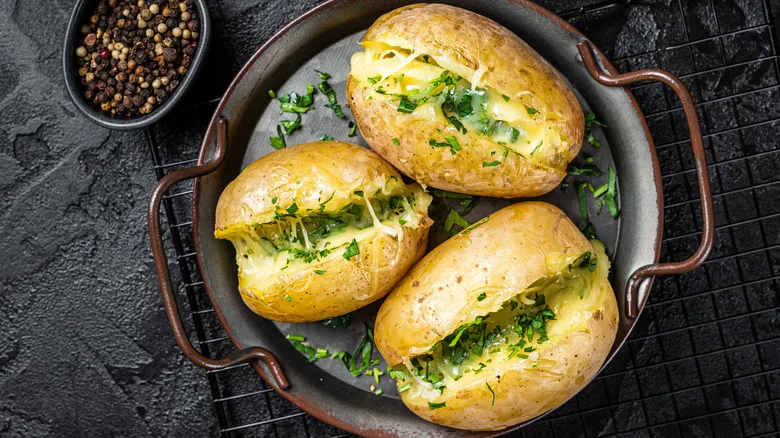
One of the easiest things to do in the kitchen is to microwave a potato. After washing it, put it in the microwave, set the timer, and bide your time. However, minor cooking and preparation practices may have a discernible impact on the finished texture. It’s easy to forget to pierce the potato before cooking and to flip it halfway through. These methods assist in controlling steam and promote more steady heating, but they involve very little more work. When you desire a soft, fluffy center rather than unevenly cooked portions, knowing why they matter may make cooking a baked potato in microwave a lot more dependable. Piercing Provides Steam With A Destination Potatoes have a high moisture content by nature. Some of the moisture is converted to steam when a potato is heated in the microwave. As cooking proceeds, pressure may build up within because the skin creates a somewhat contained exterior layer. Using a fork to pierce the skin many times results in tiny holes that eventually release steam. As the potato cooks, this lowers the pressure. The holes don’t have to be big or deep. In most cases, a few fork pricks around the potato’s various portions are sufficient. Instead of drastically altering the potato itself, the objective is only to make a few tiny holes in the skin. Another benefit of piercing is its speed. Along with cleaning and drying the potato, it may simply be included in the preparation process. Turning Promotes More Reliable Cooking Even while microwave ovens are intended to disperse energy across the cooking chamber, food does not always heat up evenly. The size, shape, density, and location of potatoes may all influence how soon various parts get soft. The potato’s orientation and position are altered as it is turned during cooking. As the cooking process progresses, this increases the exposure of various surfaces and may lessen the possibility that one side will get very soft while another stays significantly solid. Turning might be especially helpful for potatoes with uneven shapes. Repositioning allows the potato to cook more evenly since the small edges may heat differently than the thick middle. It’s generally more practical to flip the potato once at the halfway point of cooking rather than opening it constantly. These Procedures Aid In Texture Instead of having a hard center surrounded by an overdone outside, a good microwave potato should feel soft throughout. While piercing and turning focus on distinct aspects of the cooking process, they work together to improve texture. The main purpose of piercing is to control the steam that forms under the skin. Turning concentrates more on the dispersion of heat. The potato is more likely to cook reliably from one location to another when both methods are used. After cooking is finished, carefully check for softness. The thickest part should be easily penetrated with a fork or small knife. Instead of adding several more minutes right away, keep microwaving in small bursts if the center still seems solid. Short additions help keep the outside parts from becoming too dry and offer you more control. Potato Shape May Affect The Outcome When dealing with potatoes of different sizes, the cooking procedure becomes even more crucial. In general, a tiny, uniformly formed potato will cook more consistently than one that is really huge or has a unique shape. If you are cooking more than one potato, choose potatoes of comparable size before cooking. The smaller potato may get soft much sooner than the bigger one if they vary much in size. Turning is particularly helpful when cooking a single big potato since the thick core requires time to soften without overcooking one side. Cooking Can Be Made More Reliable Using Small Techniques It doesn’t need sophisticated tools or a complex process to make a pleasant microwave potato. The most significant gains may be achieved by focusing on little things. Turning helps adjust for uneven heating, while piercing offers a regulated path for steam to escape. Microwave cooking becomes more predictable when these practices are combined with monitoring for tenderness and providing a little resting time. The next time you cook a potato in this manner, rotating it halfway through and using a fork for a few more seconds may make the difference between an uneven outcome and a potato that is consistently soft from edge to center. RyanRyan is a passionate writer and blogger, primarily focusing on business growth and management. With a keen interest in exploring the dynamics of entrepreneurship, Ryan delves into topics ranging from innovative strategies to leadership insights. Alongside his professional pursuits, he nurtures a love for travel, especially in search of culinary adventures. Through his writing, Mark aims to inspire and inform readers, sharing valuable insights into the worlds of business and gastronomy. www.rtpsbihar.blog