
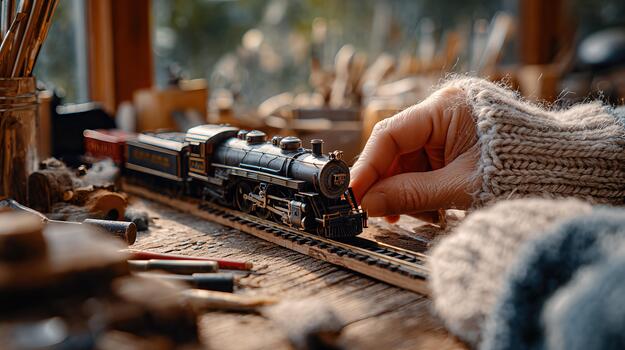
Few pastimes provide the chance to replicate a certain location and era in miniature, which is what model railroading provides. The ambiance of early steam transportation, the switch to diesel power, or the look of a modern freight network may all be captured in a layout. Hobbyists might use their collections to investigate how railways evolved alongside towns, industry, technology, and daily life rather than just collecting locomotives and automobiles.
A collection’s feeling of direction may also be strengthened by selecting a period or railway style. Each locomotive, structure, freight vehicle, station, and scenic element contributes to a greater visual narrative.
Reenacting The Steam Age
For model railway enthusiasts who value historic character and technical detail, the steam age offers plenty of inspiration. When paired with period-appropriate passenger cars, freight equipment, stations, water towers, and engine facilities, steam locomotives instantly create a unique atmosphere.
Anything from a major metropolitan terminal to a tiny rural railway that serves farms and nearby businesses may be represented by a steam-focused layout. Here, scenery is crucial. The vintage environment may be created without overpowering the trains themselves by using older cars, classic stores, telegraph poles, timber buildings, and period advertising.
Hobbyists may learn about the layout of buildings, equipment, and tracks during a particular decade by looking at actual railway photos.
Examining The Transition To Diesel
Another intriguing trend is the switch from steam to diesel. Hobbyists may depict a railway experiencing major transformation rather than restricting a layout to a single engine technology.
While early diesel units start to emerge on passenger or freight routes, steam locomotives may still be used for certain tasks. Even if modern technology becomes more prevalent, older infrastructure may still be in use. While maintaining a connection to a recognizable historical era, this combination offers potential for visual variation.
Enthusiasts who want to appreciate the operational aspect of the pastime while portraying various periods of American railway history may find Lionel model trains appealing. Selecting tools that fit the era and persona a hobbyist wants to create is the overarching objective.
Preserving The Traditional Passenger Railway
A completely distinct layout design might be inspired by passenger railroading. The railway may focus on stations, passenger terminals, streamlined trains, and scheduled operations rather than industrial switching and freight yards.
While smaller platforms provide rest stops along the journey, larger stations may serve as focus centers. To imply everyday activities, hobbyists might include features like waiting passengers, luggage carts, cabs, seats, and station signage.
The visual distinctions between distinguished long-distance trains and local services may also be emphasized by a passenger-themed railway. This allows collectors to develop various operating experiences within the same theme.
Constructing An Industrial Railway Scene
Long trips between far-off cities don’t have to be shown in every model railway. Compact layouts with plenty of operating activity are made possible by industrial railroading.
Freight traffic may be produced by factories, warehouses, mines, timber facilities, and distribution centers. Locomotives can transport empty cars and pick up loaded ones thanks to sidings. Thus, intricate switching actions may be supported in a comparatively small area.
Loading docks, storage tanks, equipment yards, employees, vehicles, and worn buildings may all contribute to the industrial character. These components may be carefully positioned to give the impression that the railway is active without the need for a complex layout.
Simulating Contemporary Railway Functions
For enthusiasts who like modern machinery and infrastructure, modern railways serve as an inspiration. Long freight trains, intermodal containers, contemporary diesel locomotives, distribution centers, and modernized signaling systems may all produce layouts that seem considerably different from those of the past.
Urban growth, motorways, more recent commercial structures, and contemporary automobiles may all be used in modern themes. Modeling the current day has the benefit of providing accessible references for scenery and operations for fans who often watch actual trains.
Combining Eras With A Goal
Many aficionados prefer historical authenticity, but it doesn’t have to become a rigid requirement. Some collectors just like driving their favorite locomotives from various eras.
Even distinct sections influenced by other eras might be included in a scheme. Another strategy is to maintain a comparatively unchanging landscape so that the apparent age may be changed by shifting locomotives and rolling equipment.
In the end, model railroading might be operational, creative, historical, or a mix of all three. Enthusiasts may continuously reinterpret their layouts, learn new facets of railway history, and construct tiny worlds that represent the elements of railroading that most interest them by investigating various historical periods and railway types.

Ryan is a passionate writer and blogger, primarily focusing on business growth and management. With a keen interest in exploring the dynamics of entrepreneurship, Ryan delves into topics ranging from innovative strategies to leadership insights. Alongside his professional pursuits, he nurtures a love for travel, especially in search of culinary adventures. Through his writing, Mark aims to inspire and inform readers, sharing valuable insights into the worlds of business and gastronomy.